
Sex Offender Checks in Bandera County
The official starting point is the free Texas Public Sex Offender Registry maintained by the Texas Department of Public Safety Crime Records Division. Search by a known name when identity is clear. Use the location function for awareness near a home, school, park, or route. Because the research environment could not verify every live control and radius choice, rely on the labels displayed by the current DPS interface rather than assuming a filter exists.
- Open the official DPS registry and review its conditions of use.
- Choose the available name or location method that fits the question.
- Enter the most precise verified spelling or address available.
- Compare photo, aliases, physical details, offense, and registering agency.
- Use NSOPW when the inquiry may extend beyond Texas.
A name match deserves a second look. Similar names, aliases, changed addresses, and delayed updates can affect results. Do not infer that a person is unregistered merely because one spelling returns no match. If a record seems wrong or suspected noncompliance raises a safety concern, contact DPS or the correct local law-enforcement authority instead of confronting anyone.
How to Search the Texas Public Sex Offender Registry
The official DPS registry search is the core public channel for Bandera County.
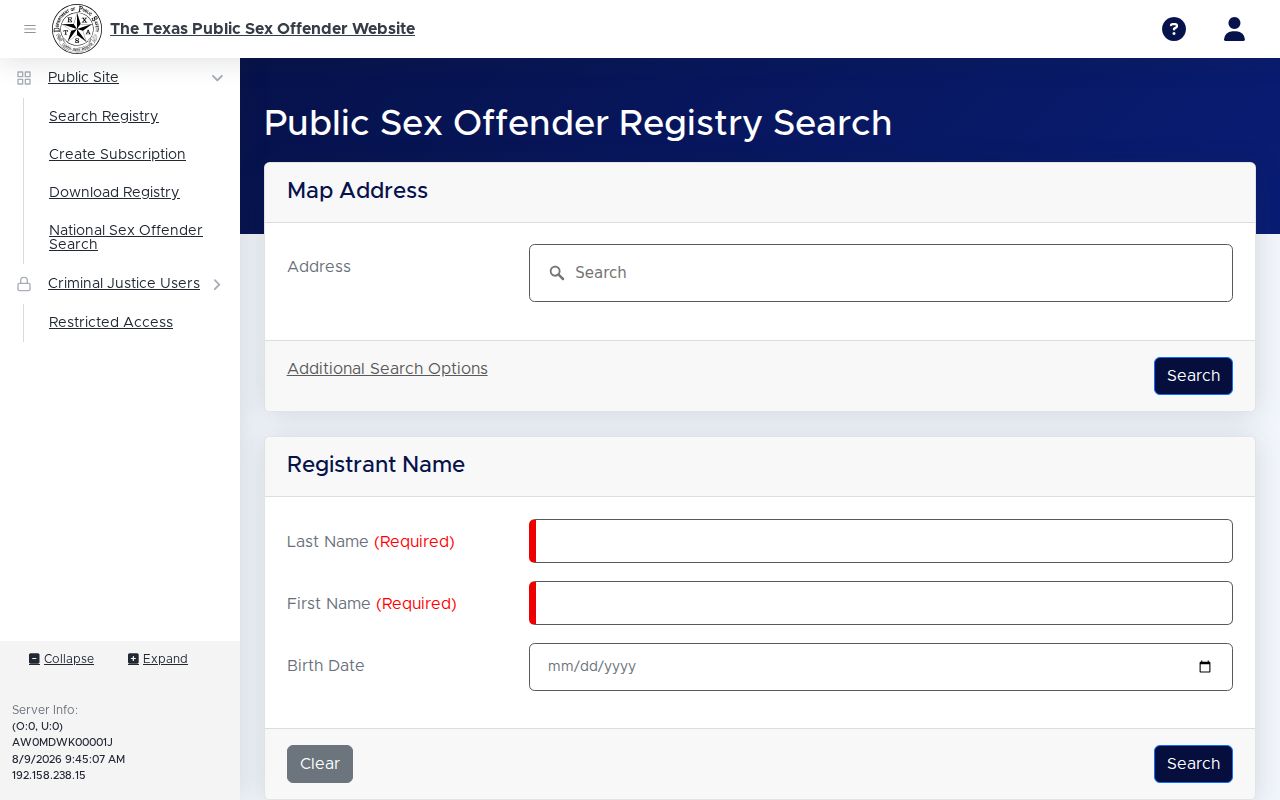
DPS also operates a registry gateway and may offer account-based subscriptions or downloads through its public services. The basic public search is free. A registry result is not the same product as the DPS public conviction name search, a clerk case file, or a fingerprint-based personal record review.
Bandera County Registry Jurisdiction
Texas guidance divides local registration work between municipal law enforcement inside a municipality and the sheriff outside it. Bandera County has one incorporated city, and that city uses a Marshal's Office rather than a police department. The generic state reference to a municipal police chief does not conclusively identify who performs each inside-city registration task here.
Before an in-person visit, call the Bandera Marshal's Office at 830-460-7172 for an address inside city limits or the Bandera County Sheriff's Office at 830-796-4323 for an address outside the city. No official local appointment hours or local registration fee were confirmed. This call-first step prevents a needless trip in a rural county where agency lines and long travel distances matter.
Inside a Registry Profile
Public Texas profile data can include the person's photograph, primary name and aliases, age or date of birth, sex, race, height, weight, eyes, hair, and descriptive marks. Location fields may show an address or geographic description. A profile can also identify the registering agency, last update, offense and statute, jurisdiction, conviction date, victim-age category, punishment or supervision indicator, risk level, registration status, end date, and specified vehicle information.
| Identity | Name, aliases, photo, age or birth date, and physical description |
|---|---|
| Location | Public address or geographic description and registering agency |
| Offense | Offense, statute, jurisdiction, conviction date, and victim-age category |
| Registration | Risk level, status, update data, and an end date when applicable |
| Not Public | Victim identity, Social Security number, phone numbers, driver's-license number, and protected juvenile data |
The absence of a field does not prove the underlying fact does not exist. Public disclosure rules protect victim identity and other sensitive data. The registry also does not present every event that might appear in a full court or fingerprint-based criminal history.
Bandera County Registry Search Results
The Texas DPS registry gateway provides another official entrance to the state system.
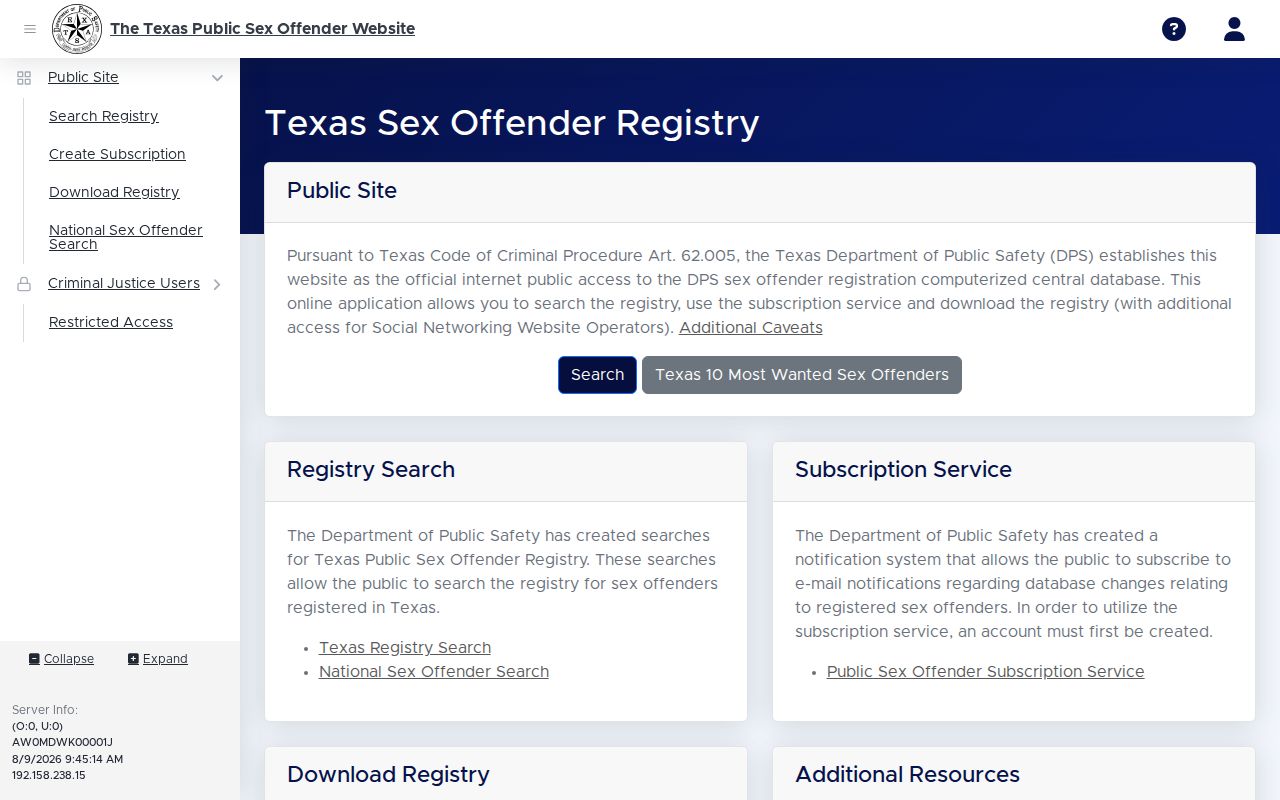
Match several facts, not just a name. Photo and physical description help, but those traits change. The registering agency and update information show where to direct a correction or compliance concern. Offense wording must be read with the listed jurisdiction and conviction date, since a label alone cannot tell the full facts of a case.
Texas Registration Levels and Requirements
Texas risk labels describe assessed danger and likelihood of continued criminal sexual conduct. They do not function as federal SORNA tiers, and they do not decide how long a person registers. Duration is driven mainly by the qualifying offense and the person's statutory history. Adult registration is generally for life or for ten years after discharge from state supervision under Code of Criminal Procedure Article 62.101.
| Level | DPS Meaning | Duration |
|---|---|---|
| Level 1 | Low danger; not likely to continue | Offense-based, not level-based |
| Level 2 | Moderate danger; may continue | Offense-based, not level-based |
| Level 3 | Serious danger; will continue | Offense-based, not level-based |
| Civil Commitment | Court-designated sexually violent predator population | Controlled by statute and court order |
Verification frequency is a separate duty. Civilly committed persons generally verify every 30 days. People with two or more sexually violent offenses generally verify every 90 days. Others generally verify annually. Individual orders and statutory facts control, so a public profile should not be used to calculate a deadline by guesswork.
Bandera County Registry Duration Rules
This distinction prevents a common reading error. A Level 1 label does not mean a short registration period, and a Level 3 label does not by itself establish lifetime registration. The qualifying offense may require life even at a lower assessed risk, while another statutory history may produce a ten-year period. Article 62.101 and the person's actual orders supply the answer.
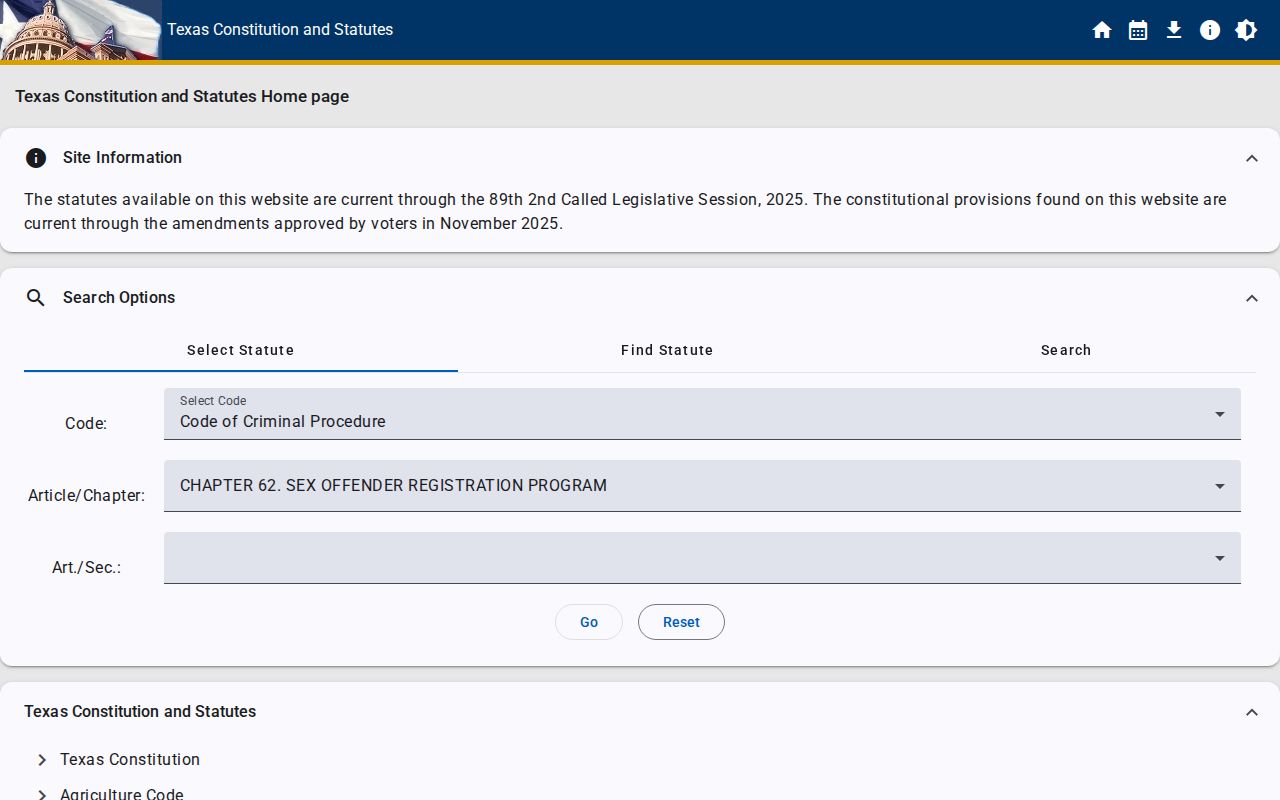
The official text of Chapter 62 sets the legal framework.
Bandera County Sex Offender Moves
Registration normally occurs by the later of the seventh day after arrival or the first date allowed by local policy. A person moving within Texas generally must give in-person notice to the current authority no later than seven days before moving and register with the new authority no later than seven days after arrival. An out-of-state move adds advance notice and destination-state duties.
Repeated visits can matter even without a permanent move. At least three visits in one month, when each involves more than 48 consecutive hours, can trigger reporting. These rules are fact-sensitive. A registrant should obtain instructions directly from the responsible authority rather than relying on a public search result as legal advice. Travel, work, school, and temporary lodging can create facts that deserve direct review by the registrar.
Bandera County Cross-State Registry Searches
Bandera County sits within a state system, but people and addresses cross borders. The U.S. Department of Justice National Sex Offender Public Website searches participating jurisdictions from one official federal interface.
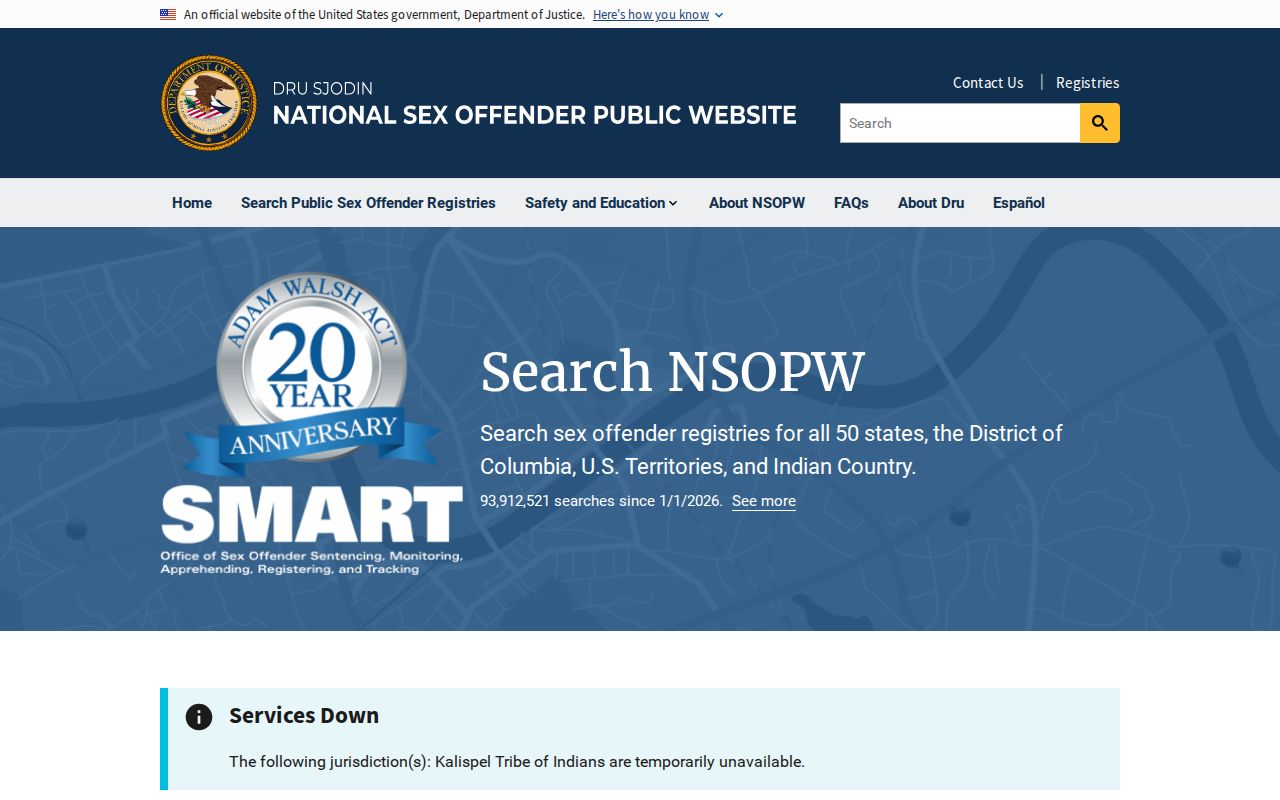
NSOPW passes through data supplied by participating registries, so the source jurisdiction remains important. Follow a match to the state or tribal registry for the most direct profile and update contact. A no-result response is not a universal clearance and should not replace emergency services when there is an immediate threat.
Bandera County Registry Notifications
DPS mails English and Spanish postcards for specified high-risk or civilly committed releases and moves. The usual geographic reach is one mile in an unsubdivided area or three blocks in a subdivided area. Texas law also sets school-notice triggers. These notices serve awareness, but they are not a substitute for reviewing the current registry.
Chapter 62 does not impose one blanket statewide distance from every school. Parole or probation child-safety zones and authorized municipal ordinances are separate legal sources. Research did not confirm a Bandera-specific official distance ordinance. Treat any broad claim that all registrants face the same school-distance limit with caution.
Notification and registration also serve different jobs. A postcard may be required only for a defined release or move, while the registry continues to carry public data under its own rules. A household that did not receive mail should not infer that no registrant lives nearby. Search the official system directly and check it again when a planned route, residence, or family safety concern changes.
Community Notification and Lawful Use
Registry information supports household safety plans, informed conversations, and community awareness. It does not authorize surveillance, public shaming, threats, exclusion, or punishment. A listed person may have completed the court-imposed sentence while remaining subject to registration. The public role is to use verified information calmly and report a genuine concern to authorities.
Use registry data safely: Do not harass, threaten, confront, intimidate, or commit a crime against a registrant or anyone in the household. Do not use registry information to deny housing, employment, or services except where law expressly permits. Report suspected noncompliance to DPS or local law enforcement.
Failure to comply with registration duties may be prosecuted under Article 62.102. Members of the public should not investigate that offense themselves. Call 911 for an immediate danger. For a non-emergency compliance concern, provide the observed facts to the Marshal, Sheriff, or DPS and let trained officials verify them.